
Textüberschrift
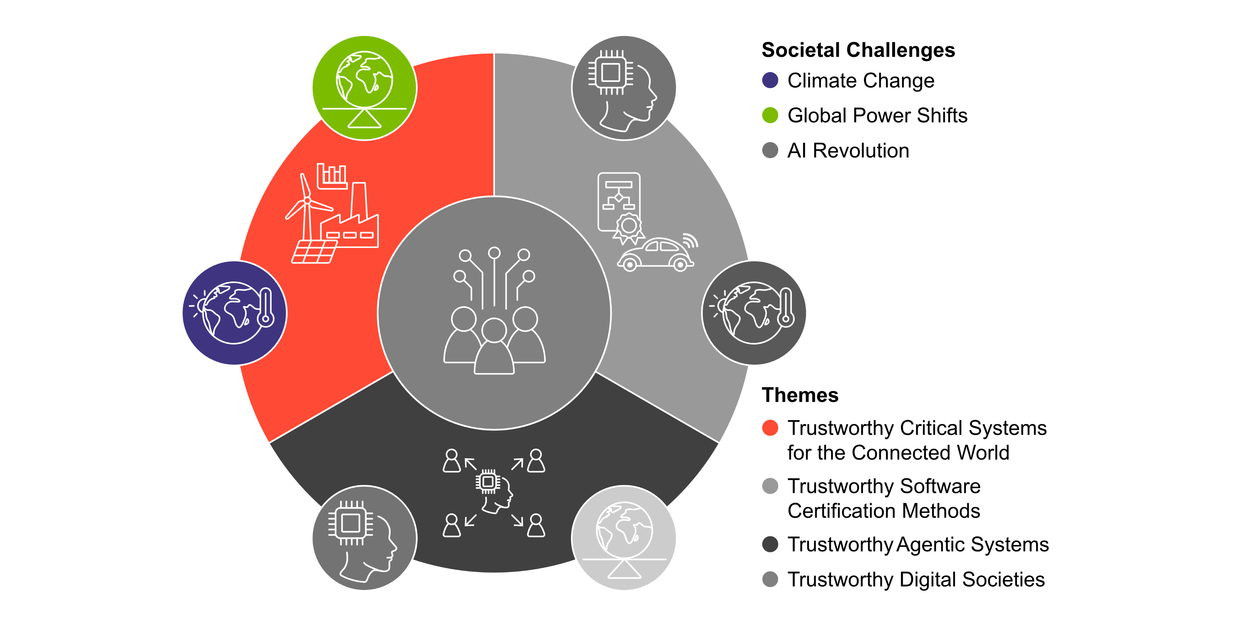
Subtopic 1 – Trustworthy and Resilient Critical Infrastructures:
Digitalized critical infrastructures for Energy and Production and their cybersecurity are a key enabler for protecting our climate while fostering an industrialized country. Threats against these infrastructures are expected to increase substantially due to the geopolitical crises and hybrid war. Concrete security solutions will be developed and evaluated in the KASTEL Security Laboratories for Energy and Production. These solutions have to reflect the growing threats and have to be compliant to the legal requirements and standards. The resulting research challenges therefore span from understanding the physical consequences of cyberattacks to the tooling for systematic risk analysis, risk mitigation, development, testing, and security assessment of components, networks, and systems. The necessary research on security notions for complex systems and their analysis directly connects the the research on software
certification in Subtopic 2. The concrete improvements for the security of the energy systems of the future serves as a lighthouse application for the whole Topic TruST.
To achieve technological sovereignty without having to build all components in Europe, we follow a modular approach where the system architecture allows to tolerate untrusted components. Methods from cryptography, like the use of secure multiparty computation, or trusted execution environments provide a strong link to Subtopic 3. Possible negative effects of AI-controlled systems can also be contained in such modular systems.
The future geopolitical situation leads not only to an increase of cyberattacks, but also to an increase of disinformation. To fight disinformation Subtopic 1 will contribute cryptographic solutions to the Content Authenticity Initiative. During the PoF V this research will be broadened to allow content authenticity and proofs of provenance for scientific data as well, because the increasing use of AI in the scientific process (e.g. HELMA) makes it necessary to also automate parts of the evaluation of scientific results.